Every investor remembers their first one. You are stopped at a light, you glance down a side street, and there it is: knee-high grass, a stuffed mailbox, plywood where a window should be, a notice taped to the door. Nobody is living there. Nobody is taking care of it. And nobody else has found it yet, because it is not on the MLS, on Zillow, or on anyone's list.
That is driving for dollars. It is the oldest off-market strategy in real estate, and it still works because it points you at the one thing every other investor is fighting over: a property with a problem and an owner who might be ready to let it go. Here is how to do it the classic way, and how to do the same thing from your couch in a fraction of the time.
What driving for dollars actually means
Driving for dollars is exactly what it sounds like. You pick a neighborhood, you drive (or walk, or bike) up and down the streets, and you write down every property that looks distressed, neglected, or abandoned. Later you look up who owns each one, you get their phone number, and you reach out to ask if they would consider selling.
The whole strategy rests on a simple bet: a property that looks neglected is often owned by someone with a reason to sell. An out-of-state landlord who is tired of the calls. An heir who inherited a house they do not want. An owner who fell behind and is one missed payment from foreclosure. These are motivated sellers, and they almost never list on the open market, because listing means agents, repairs, showings, and waiting. They want the problem gone.
The distress signals to write down
Train your eye to catch the small stuff. When you are scanning a street, the property is telling you a story. Look for:
- Overgrown grass and landscaping — nobody is maintaining it.
- Boarded or broken windows — vacant, or the owner is out of money.
- Tarps on the roof, peeling paint, visible damage — deferred maintenance the owner can no longer afford.
- A full or overflowing mailbox, flyers on the door — nobody is collecting the mail.
- Code-violation or condemnation notices taped to the door — the city is already on them.
- Piled-up trash, an abandoned car, no curtains or furniture inside — clear signs of a vacant home.
Any one of these is worth a note. Two or three on the same house, and you have a real lead.
Why off-market beats the MLS
When a house hits the MLS, it is in front of every investor, every agent, and every retail buyer in the county within minutes. You are competing on price against people who will pay more than you can. Off-market is the opposite. You found the property nobody else found, you are talking to the owner before anyone else, and you set the terms of the conversation. Less competition means better margins, and better margins are the entire game in wholesaling and flipping.
The problem with the windshield method
Here is the catch with literally driving: it does not scale. A good afternoon of driving might cover a few hundred houses if you are efficient. You burn gas, you burn hours, and you can only be on one street at a time. Worse, the house you wrote down is just an address. You still have to go home, pull county records, figure out the owner, and find a way to reach them. Most people quit before they finish the list.
The signals you are hunting for in a windshield, though, are the same signals that live in property data: vacancy, absentee ownership, tax delinquency, pre-foreclosure status, high equity. So instead of driving the neighborhood looking for them, you can search the entire county for them at once.
How to drive for dollars without leaving your desk
This is where PropQuest replaces the windshield. Open the map, draw the area you want to work, and you are looking at every property in it — not the handful you happened to drive past.
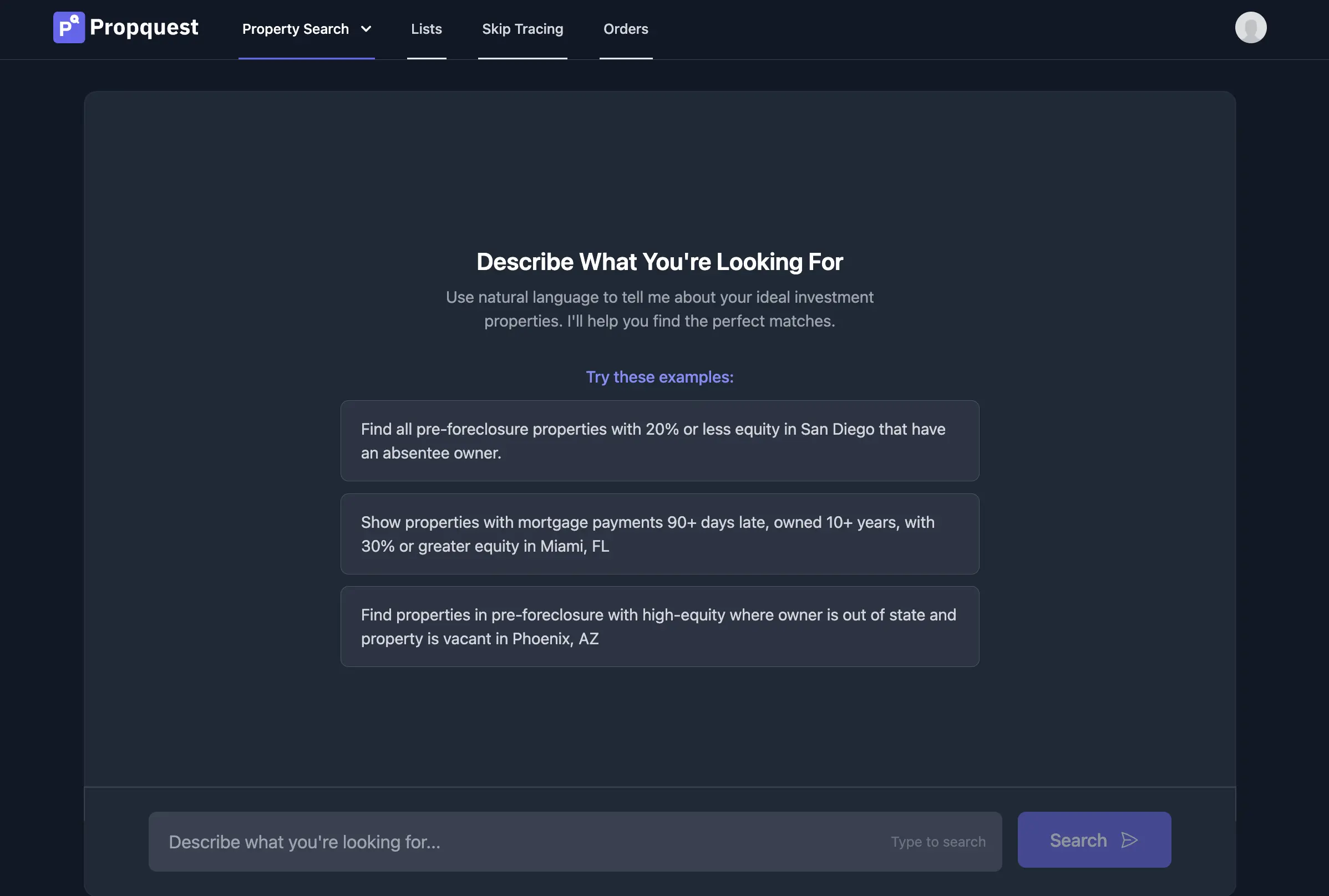
The map is your route, except it covers the whole market and never makes you parallel park. From here, the work is not "find houses that look distressed." It is "tell the data which kind of distress you want."
Stack the filters that signal a motivated owner
This is the part the windshield can never do. You cannot see, from the street, that an owner lives three states away, owns the house free and clear, and is two payments behind. The filters can. Stack a few of these and your map narrows from "every house" to "every house with a motivated owner":
- Absentee / out-of-state owner — the mailing address does not match the property. These owners sell.
- Vacant — the digital version of plywood windows and a full mailbox.
- High equity or free and clear — the owner can actually afford to sell at a discount.
- Pre-foreclosure and tax-lien — a clock is ticking, and the owner knows it.
- Tired landlord signals — long ownership, older owner, multiple properties.
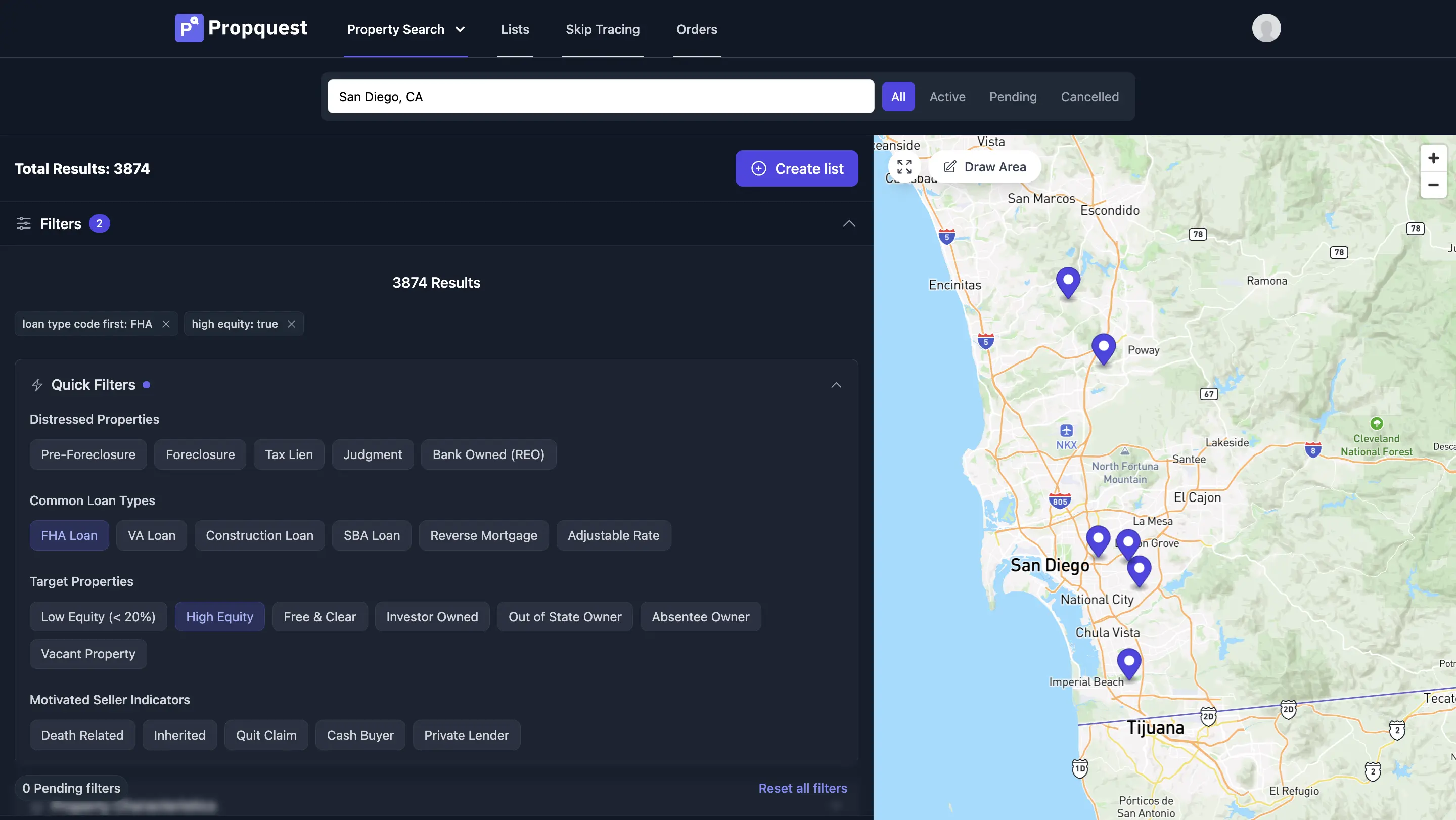
Each filter you add is a street you would have had to drive. Stacking three or four of them in a few seconds is the equivalent of driving the entire county and somehow knowing the owner's situation at every door.
Build your list and work it like a route
A drive is only worth something if you act on it. Save your search, drop the matches into a list, and now you have a route you can work through methodically instead of a stack of sticky notes on your dashboard.
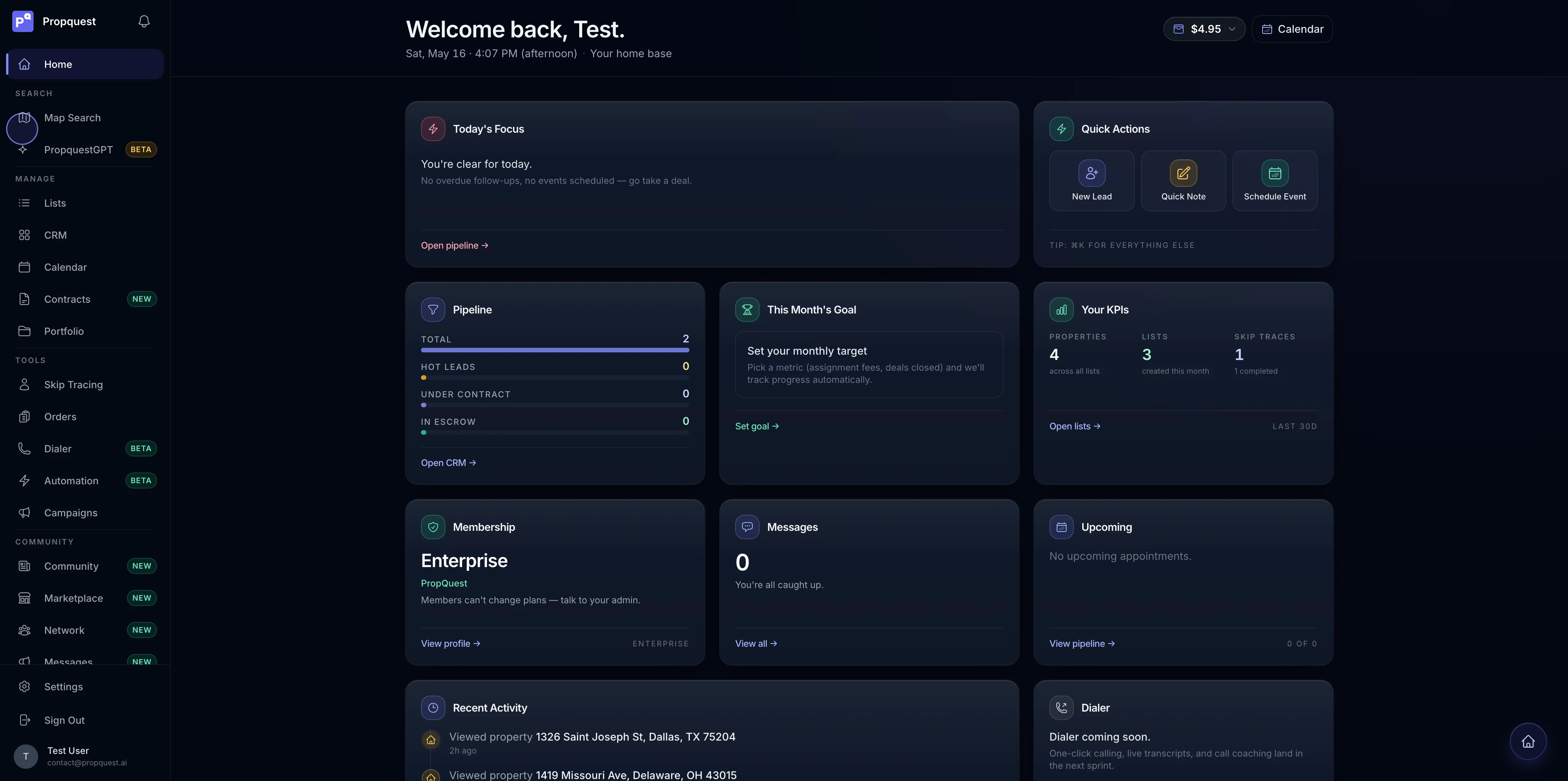
Treat the list like a real route: work it top to bottom, mark who you have contacted, and keep the search saved so new properties that match drop in automatically. Driving for dollars stops being a one-time afternoon and becomes a system that refills itself.
From a property to a phone call
A list of addresses is not a list of deals until you can reach the people who own them. The county gives you a name and a mailing address, almost never a working phone number. Closing that gap is called skip tracing, and you can run it on your whole list at once. If you have never done it, start here: Skip Tracing 101: How to Find Any Property Owner's Phone Number.
The first conversation
Once you have a number, the goal is not to pitch. It is to find out whether there is a reason to sell, and to be the easy, no-hassle option when there is. For the actual scripts and the mindset that turns a cold call into a contract, read How to Find Motivated Sellers (Without Buying a List That's Already Burned).
Make it a habit, not an event
The investors who win with driving for dollars are not the ones who grind out one heroic Saturday. They are the ones who run a tight area every week, keep the list fresh, and follow up. Whether you do it through a windshield or through a map, the formula is the same: find the distress, find the owner, make the call, and keep showing up. The only question is how much ground you want to cover, and how much gas you want to waste doing it.
Pick your first neighborhood, draw it on the map, and stack your filters. Your first off-market deal is sitting on a street you have probably already driven past.